Walt Disney World Tips for Families with ASD Children: The Complete 2026 Guide
Practical, honest advice from families who have done it everything you need to plan a magical, manageable Walt Disney World trip for your child with autism spectrum disorder (ASD).

A Walt Disney World trip with an autistic child is absolutely possible. Not just possible; for many families, it is the most magical holiday they ever take together.
But it requires a different kind of planning.
The standard Disney trip advice: rope drop every day, pack in as many rides as possible, hit all four parks does not work for most families with autistic children. The trips that work are the ones built around the child: their sensory profile, their interests, their energy, their capacity, and their need for predictability and routine within an environment that is, by design, full of surprises.
This guide gives you the tools to build that trip. It is based on current 2026 information, real family experience, and the specific knowledge that makes the difference between a Disney trip that is truly magical and one that is genuinely hard.
Before Anything Else: Shift Your Expectations
Before we talk logistics, we need to talk expectations.
The single biggest predictor of a successful Disney trip with an autistic child is not the resort you choose, the DAS registration, or the Lightning Lane strategy. It is whether the family goes in with realistic expectations about what the trip will look like.
A successful Disney trip with an autistic child might look like: two or three rides in a morning session, then back to the resort pool by noon. One character meet that went better than expected, and two that you skipped because the queue looked wrong.
Leaving a park at 10am. That is not a failed trip. That is a trip that worked for your child. The families who describe their Disney autism trips as absolute magic are almost always the ones who stopped trying to have a typical Disney trip and started having their own version.
Small victories deserve to be celebrated. If your child rode one ride happily, shared a meal without distress, and fell asleep in the stroller on the way back to the bus, that is a success. Build on it.
Part One: Planning Before You Book
Know Your Child's Sensory Profile
No two autistic children are the same. There is a popular saying in the autism community: "If you know one person with autism, then you know one person with autism." What works brilliantly for one child may be exactly wrong for another.
Before any logistical planning begins, map your child's specific sensory profile:
Sound: Does your child have significant sensitivity to sudden loud noises? Sustained loud environments? Unexpected music? This affects which attractions are manageable, whether the fireworks can be attempted, and what preparation is needed.
Darkness: Many Disney attractions involve sudden darkness. Can your child tolerate this? Is it the darkness itself, or the combination of darkness with movement and noise?
Motion: Some attractions involve significant motion: spinning, dropping, rapid acceleration. What is your child's tolerance for each type?
Crowds and personal space: How does your child respond to large crowds pressing close? To unpredictable movement around them? To strangers making eye contact or speaking to them?
Temperature and heat: Florida summers are really hot. Does your child struggle to regulate body temperature? Do they find heat aversive in a way that will affect the day?
Visual stimulation: The parks are visually busy: bright colors, characters in costume, signage everywhere, crowds moving in all directions. What is your child's response to sustained visual busyness?
Food: Does your child have a restricted diet, specific textures they will not eat, or foods they rely on for comfort and regulation that must be available? This affects every meal decision of the trip.
This profile, your knowledge of your child, is the most important planning tool you have. Everything else in this guide is built on it.
Prepare Your Child for What to Expect
Our kids with autism prefer set schedules and do not easily adjust to change. Vacationing in new places can be discomforting. However, proper planning can help cope with a unique situation.
Start preparing your child for the trip weeks, ideally months, in advance. The more familiar the environment feels before you arrive, the less overwhelming the first day will be.
Social stories: A social story is a simple, illustrated narrative that walks through what will happen: arriving at the airport, checking in at the resort, entering the park, going on a ride, what it looks like when a ride is a bit scary, going back to the hotel at the end of the day. Social stories specific to Walt Disney World are available from autism travel specialists like Access Amusement and can be created at home using photos downloaded from the Disney website.
YouTube walkthroughs: Ride-through videos for virtually every Disney attraction are available on YouTube. Watching them together in your home, in your own time, with the ability to pause and talk through what you are seeing is one of the most effective preparation tools available. Knowing your child's triggers and sensory needs goes a long way towards planning an itinerary that works.
Virtual resort tours: Show your child photos and videos of the specific resort hotel, the room, the pool, and the route from the resort to the transport. Many Disney Resort hotels have virtual tours on YouTube. The less unfamiliar the sleeping environment is on arrival, the calmer the first evening will be. Here’s some articles and videos we recommend:
Talk about the plan: Share the day-by-day itinerary with your child in age-appropriate detail. Some children benefit from knowing every detail of every day; others do better with a lighter overview. Know which your child is and calibrate accordingly.
Practice the transport: Ride a city bus or subway to see how they handle public transportation; important since Disney buses, monorails, and Skyliner gondolas are a key part of the Disney experience. If your child has not experienced gondola travel, enclosed vehicles, or crowded buses, these can be sources of distress that are worth anticipating and preparing for.
Choose Your Dates Carefully
Planning your trip around low crowd levels and milder weather makes a huge difference when navigating Disney World with autism.
The quietest and most sensory-manageable periods at Walt Disney World:
Early January (after New Year's through mid-January) among the quietest days of the year
Late January and early February consistently low crowds; cool, comfortable Florida weather
Early September (after Labor Day through late September) crowds drop sharply; beginning of the cooler season
Early November (before Thanksgiving week) excellent crowd levels; beginning of holiday season atmosphere without peak-season pressure
Periods to approach with extra preparation or avoid:
Spring break (mid-March through mid-April) very high crowds
Summer school holidays (mid-June through mid-August) highest crowds, most intense heat, most demanding sensory environment
Thanksgiving week and Christmas break peak crowds, peak prices, peak sensory intensity
Non-Park Days Are Not Optional
While it's tempting to pack your days full and try to get the most out of your money, doing four park days in a row rarely works well for a Disney World autism trip.
For most autistic children, the parks are profoundly stimulating environments even on a good day. Recovery time is not a luxury; it is what makes the following park day possible.
Build non-park days into your trip deliberately, Access Amusement certified travel advisors refer to these as Resort Reset Days. A day at the resort pool, a morning at Disney Springs (which requires no park ticket and offers a calmer, more manageable environment), or simply a quiet hotel morning are all valid and important parts of a well-planned autism Disney trip.
The families who report the happiest overall experiences are consistently those who planned for balance, not maximum park time.
Part Two: Choosing Your Resort
Where you stay shapes the entire trip: the quality of sleep, the ease of the commute to the parks, the availability of a calm retreat space, and the resort's own sensory environment all matter enormously.
The Most Important Resort Factors for Children with ASD
Sensory environment of the resort itself. Value resorts like Art of Animation are boldly, brilliantly themed with giant Nemo characters, sweeping Cars landscapes, vivid colors everywhere. For children whose special interest is the relevant franchise, this can be regulating and magical. For children who need a calmer visual environment to decompress at the end of a park day, a more subdued Moderate or Deluxe resort setting is often a better fit.
Room size and layout. Larger rooms give the child space. DVC villa one or two-bedroom configurations with separate sleeping areas are particularly good for families where the child needs their own space to regulate. Club Level at a Deluxe Resort provides a private lounge for quiet meals and snacks away from busy resort restaurants.
Transport type. Transport type is a key consideration, it's easy to use the Skyliner gondola, but your child may be more comfortable on a traditional bus or the monorail. Know your child before choosing a resort, and choose a transport type they can manage.
Resort size and navigability. Smaller, more compact resorts: Port Orleans French Quarter, the villas at Wilderness Lodge, the Contemporary's tower mean shorter distances between the room and the lobby, pool, and bus stop. For children who find long walks through unfamiliar resort grounds disorienting, compact layouts are preferable.
Top Resort Recommendations for Autistic Children
Disney's Wilderness Lodge is consistently rated the most sensory-friendly Deluxe Resort: calm, nature-immersive, warm, and notably quieter than busier properties.
Disney's Animal Kingdom Lodge for children with a strong animal interest: the savanna view, giraffes outside the window, and the resort's rich natural setting can be regulating for the right child.
Port Orleans French Quarter for the most manageable Moderate Resort experience: compact, calm, and without the overwhelming scale of larger properties.
Art of Animation's family suites for children with a strong Finding Nemo, Cars, or Lion King special interest: the immersive theming can be deeply comforting, and the larger suite space is very helpful.
For a full guide to sensory-friendly resort selection, see Access Amusement’s article:
Part Three: The Disability Access Service (DAS)
What DAS Is
Disney's Disability Access Service (DAS) provides assistance to guests and families with disabilities to navigate the parks more easily. It is intended to help guests who have difficulty waiting in line. DAS is intended to accommodate those guests who, due to a developmental disability like autism or similar, are unable to wait in a conventional queue for an extended period of time. Instead of physically waiting in a queue, you receive a return time equal to the current standby wait time. You can spend the time anywhere in the park and then return to enjoy the ride through the Lightning Lane entrance.
DAS is not a skip-the-line pass your child waits the same amount of time as everyone else, just not in the physical queue. This is an important distinction both practically and in how you explain it to other members of your party.
How to Register in 2026
Pre-registration via video chat is available from 2 to 30 days before your park visit. There is no option for an in-person interview, even if you are at the park. If you choose to go to Guest Relations, they will give you an iPad and have you register through the same video chat link.
Your child must be present during the video call. The Cast Member will speak with them, even briefly. Prepare your child for this in advance.
How to Describe Your Child's Need Effectively
Disney now approves guests for DAS based on how standing in a traditional line affects them, not just a diagnosis. Instead of saying "my child has autism," you'll need to explain how their autism impacts their ability to wait in line.
Families who describe specific observable behaviors: elopement attempts, sensory meltdowns in enclosed spaces, inability to tolerate unpredictable wait extensions are better positioned than those who lead with a diagnosis label.
Prepare specific, concrete examples before the call:
"When waiting in a confined queue for more than 10 minutes, [child] begins to have a meltdown and attempts to run out of the queue"
"My child elopes without warning when overwhelmed, which in an enclosed queue presents a significant safety risk"
"My child cannot process that the wait will end and becomes increasingly distressed as waiting continues, in a way that escalates into self-harm"
The more specific and behavioral the description, the more effectively it communicates why DAS is needed.
The 2026 DAS Reality
Approval has become meaningfully harder since the 2024 overhaul. Plan your trip assuming DAS may not come through. If it does, it's a meaningful upgrade to an already-workable strategy. This is important advice. Build your park strategy around what is manageable without DAS, and treat DAS as a valuable addition if approved, not an assumption.
DAS in Practice
Once registered, book DAS return times through the My Disney Experience app. You do not need to visit each attraction to get a return time. Book a return time, go and do something else, and come back at the designated time.
Two DAS Advance Selections per day can also be pre-booked during the registration process secured return times for specific high-priority attractions before you even arrive at the park. DAS Advance Selections have been DISCONTINUED.
Part Four: The Sensory Experience Details Guide | Read This Before Every Park Day
Disney publishes Sensory Experience Details for every attraction across all four parks rating each ride across sensory dimensions including sound levels, darkness, physical movement, lighting effects, and more.
Disney provides a guide for guests with cognitive disabilities that details the sensory aspects of each ride, including loud noises, strobe lights, and other potential triggers. This resource is invaluable for planning a smooth day in the parks. Discuss attraction preferences with an Access Amusement certified travel advisor or download the Sensory Experience Details guide from the Disney website (disneyworld.disney.go.com) before your trip, review it for every attraction you plan to visit, and use it to build your itinerary around your child's specific sensory profile.
Sensory ratings are also posted on signs outside each attraction in the parks which serves a useful real-time reference if plans change on the day.
Lower-Sensory Attraction Recommendations by Park
For families whose children have significant sensory sensitivities, knowing which attractions are lower-intensity before you arrive allows you to build a manageable day:
Magic Kingdom (lower sensory): Dumbo the Flying Elephant (with sensory play area), PeopleMover, It's a Small World (does have repetitive music, but no dark spaces), Jungle Cruise, Enchanted Tales with Belle.
The Dumbo play area deserves specific mention: a covered, padded sensory play space adjacent to the Dumbo ride, available to families while they wait for their return time. One parent waits with the child in the play area while the other holds a return time; when it arrives, both can ride. It is one of the most autism-friendly design features in any Disney park.
EPCOT (lower sensory): Living with the Land, Spaceship Earth, World Showcase exploration, Aquarium at The Seas Pavilion.
EPCOT's World Showcase is the most inherently calm and spacious area of any Disney park: an open, outdoor promenade with cultural exhibits, gentle entertainment, and natural breathing room between attractions.
Hollywood Studios (lower sensory): Alien Swirling Saucers (mild motion), Mickey & Minnie's Runaway Railway (some sensory surprise review the Sensory Guide carefully before attempting).
Animal Kingdom (generally lowest sensory of all four parks): Kilimanjaro Safaris, Wilderness Explorers (interactive and low-pressure).
The Gorilla Falls Exploration Trail and Maharajah Jungle Trek are two of the best attractions in all of Walt Disney World for sensory-sensitive children: self-paced walking trails through beautiful animal habitats, with no queuing, no waiting, and the option to spend as long or as short as needed at each exhibit.
Animal Kingdom for most families has the lowest sensory intensity of the four parks, wide outdoor pathways, real animals to observe, and self-paced experiences that don't require queuing. Start your trip at Animal Kingdom if you can.
Part Five: Packing | What to Bring
The Sensory Kit
Every family visiting Disney with an autistic child should have a dedicated sensory kit in their park bag. Essentials include:
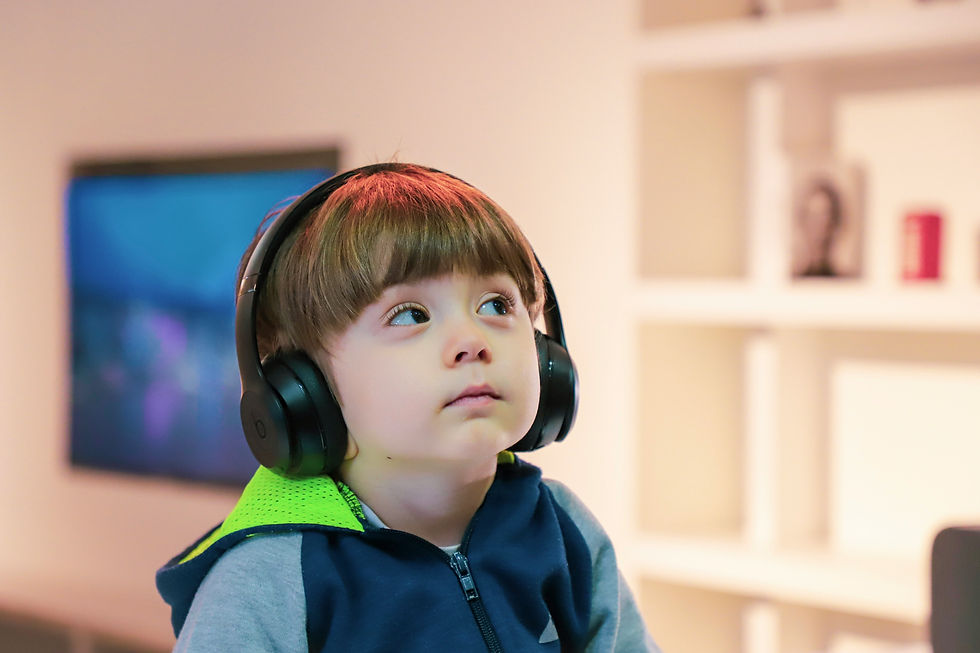
Noise-cancelling headphones. Non-negotiable for children with any sound sensitivity. Packing noise-reducing headphones or earplugs can help your child manage sensory overload. Wear them before entering a known loud environment, not in response to an unexpected noise. Introduce them at home before the trip so the child is comfortable wearing them.
Comfort items. A favorite toy, stuffed animal, or sensory tool from home. Familiar objects provide real regulatory support in unfamiliar environments, bring whatever works for your child without worrying about what anyone else thinks.
Fidget tools. Small, portable, unobtrusive. Whatever your child uses at home for self-regulation.
Sunglasses. For children with visual light sensitivity, quality UV-blocking sunglasses reduce the sensory load of Florida's intense sun throughout the day.
Familiar snacks. Disney allows guests to bring their own food and snacks into the parks (no glass containers or alcohol). This is helpful for children with sensory food aversions or strict dietary routines. Pack whatever your child reliably accepts, in quantities sufficient for the day.
Water bottle. Refillable, with your child's preferred mouthpiece. Disney provides free cups of ice water at any quick-service location.
Change of clothing. Sealed in a bag. For anything from a water ride to an accident.
Sunscreen. In a formulation the child will tolerate. Trial before the trip; there is no opportunity for trial runs in a theme park parking lot.
ID information. Name, parent/caregiver contact number, any relevant medical information. A waterproof wristband, a card in a pocket, or information on the inside of the child's clothing provides this to anyone who might need it.
Location Technology
AirTag, Tile, or Smart Tag are the top recommendation. If your child won't tolerate wearing one as a bracelet or necklace due to sensory sensitivities, there are discreet options like shoe insoles or hidden AirTag pockets for clothes.
For children with elopement risk, a Bluetooth tracker is one of the most important safety tools available. Attach it discreetly to clothing or shoes, ensure it is fully charged daily, and know how to use the Find My app on your phone before you need it.
Stroller Considerations
For children who use a stroller as a mobility device, safe space, or familiar environment, collect a Stroller as Wheelchair tag from Guest Relations on arrival. The tag system enables you to use a stroller as a wheelchair, allowing you to wait in line for attractions, buses, and more, without having to fold the stroller up.
For children with elopement risk, a stroller with a five-point harness provides a safe, contained environment at moments of high stimulation. By combining DAS with the Stroller as Wheelchair tag for safety and identifying quiet break zones in advance, families can minimize sensory overload and meltdowns.
If you're unable to bring your own stroller to the parks, strollers can be hired from Kingdom Strollers or similar Orlando companies who will drop off and collect from your resort hotel.
Part Six: In the Parks | Day-of Strategies
Arrive Early and Take It Slowly
Use Early Theme Park Entry included for all Disney Resort hotel guests to arrive in the park before general opening. The first 30 minutes are the quietest of the entire day, with the shortest queues, the most space on pathways, and the calmest overall environment. Use this time to let your child settle into the environment before the crowds build.
Do not rush to the first attraction the moment you arrive. Walk a section of the park, let the environment become familiar, and let your child's nervous system have a moment to adjust.
Build the Itinerary Around Your Child's Best Hours
Most autistic children are at their most regulated and resilient in the morning before the cumulative sensory load of the day has built up. Plan your must-do attractions for the first two to three hours of your park visit, and leave lower-priority or lower-stimulation activities for the afternoon when energy and tolerance are lower.
The Midday Break
Plan regular breaks, especially during midday when the parks are busiest and the heat is at its peak. This downtime is essential for relaxation and helps prevent sensory overload.
The period from approximately 11am to 3pm is the hottest, busiest, and most sensory-intense time of the day. For most families with autistic children, this is the time to leave the park returning to the resort for a rest, a swim, lunch in a familiar setting, and a recovery before an optional evening return.
Families who stay in the park through the midday peak, pushing through tiredness and increasing dysregulation, consistently report worse outcomes than those who build in a midday break.
Using Quiet Areas
Every park has quieter areas that most visitors overlook. Knowing where they are before you arrive and building them into your day as planned rest points is far more effective than finding them in a crisis.
Magic Kingdom: The pathway between TRON and Fantasyland. The Tomorrowland Terrace seating area between shows. The upper seating level of Columbia Harbour House restaurant one of the quietest spots in the whole park.
EPCOT: The UK and Canada Pavilion garden areas. The Living with the Land queue area. The World Showcase promenade in the pavilions furthest from the main entertainment stages.
Hollywood Studios: The area behind the Star Wars Launch Bay. The streets between Echo Lake and Hollywood Boulevard outside peak times. Note: quiet options at Hollywood Studios have reduced in 2026 with the closure of MuppetVision's courtyard and Animation Courtyard.
Animal Kingdom: The Gorilla Falls Exploration Trail. The Oasis area at the park entrance in early morning. The Maharajah Jungle Trek. Conservation Station.
First Aid stations in every park: quiet, air-conditioned, staffed, and explicitly available for any guest who needs a rest or recovery space.
Character Meets: The Honest Picture
Character meets are one of the most potentially magical, and most potentially distressing experiences at Walt Disney World for children with ASD.
For children with a specific Disney character as a strong special interest, meeting that character in person can be one of the most joyful moments of the entire trip. For children who find character costumes frightening, large physical performers unpredictable, or the noise and crowd of a character meet overwhelming, they can be traumatic.
Know your child. If character meets are a goal, prepare your child in advance with photos and videos of the specific character's costume and of what a meet and greet looks like. Approach from a distance first to gauge the response. Allow your child to lead the level of engagement never force a physical interaction.
Character meals are best for sensory seekers, but sit at a table further from the entrance. Character dining where characters come to the table rather than the family joining a queue is often more manageable for autistic children than a standard meet and greet queue, because it gives the child more control over the distance and duration of the interaction.
Managing the Fireworks
The fireworks at Magic Kingdom and EPCOT are one of the hardest sensory experiences at Walt Disney World for many autistic children.

Noise-cancelling headphones should be worn before the first firework not as a response to the first unexpected burst. For children for whom the visual spectacle is exciting but the sound is overwhelming, headphones allow the experience to be enjoyed rather than endured.
Alternatively: If your child is sensitive to noise, consider viewing the fireworks from a distance like the Polynesian Resort beach. Resort hotel beach viewing removes much of the crowd pressure and allows the family to leave immediately if the experience is too much, without navigating a park exit.
Not every fireworks show needs to be attempted. If your child finds them distressing, skipping the fireworks and spending that time at the resort, where the evening is quieter and more manageable is a completely valid choice.
Food Strategy in the Parks
Mobile order via My Disney Experience helps avoid lines and delays. Pack snacks or meals if dietary sensitivities are a concern. Disney allows food to be brought in.
Mobile ordering is one of the most practical tools available for families with autistic children as it eliminates the queue at the counter, allows the food to be ordered and paid for in advance, and means that when the child is hungry and ready to eat, the food is available almost immediately. Use it for every quick-service meal.
For children with restricted diets, ARFID, or significant food sensitivities, always have familiar, accepted food in the bag. Disney restaurants can accommodate dietary restrictions with advance notice, but the safest approach is to ensure the child always has access to food they will eat, regardless of what is on the menu.
Part Seven: Safety and Elopement
Elopement: the sudden, impulsive departure from a safe environment is a known risk for many autistic children in overwhelming situations. In a theme park with tens of thousands of visitors, prevention and response planning is essential.
Identification. Every child should carry identification with a parent's name and mobile number. A waterproof silicone wristband worn on the wrist is the simplest and most reliable option. For children who will not tolerate a wristband, information written on the inside of clothing or a card in a secure pocket provides the same function.
Location technology. An AirTag or similar tracker, attached discreetly to clothing, shoes, or a bag, allows quick location if the child wanders. Ensure it is charged daily.
Pre-agreed meeting point. Identify a specific meeting point in each park; a landmark, not a map location and walk to it together when you arrive. Show it to your child and make sure they know this is where you will meet if you become separated.
Cast Member awareness. If your child becomes separated, tell the nearest Cast Member immediately. They have communication systems and protocols specifically for reuniting separated guests and respond very quickly.
Keep Cast Members informed. If your child is a significant elopement risk, letting the Cast Member at each attraction know "my child may try to leave suddenly if she becomes distressed" means they are watching for this and can respond quickly.
Part Eight: Services and Contacts at a Glance
Service | Access | Contact |
Accessible Travel Agency | Email or call in advance | |
Incontinence Care Product Recommendations (Pre-Trip Packing) | Incontinence supplies: brief style diapers with tabs, pull-ups, wipes, waterproof coverings, and more. | Referral Code: NSRP-5CY5-ZF0M $10 off first order |
DAS pre-registration | My Disney Experience app, 2–30 days before visit | Via app video chat |
Sensory Experience Details guide | Disney website and My Disney Experience app | |
Accessibility Planning Guide (PDF) | Disney website, updated May 2026 | |
Stroller as Wheelchair tag | Guest Relations in any park | In-park |
First Aid / rest space | Each park — see map or My Disney Experience app | In-park |
Companion restrooms | Throughout all parks — My Disney Experience app | In-park |
Quiet areas | Ask any Cast Member | In-park |
Disability services phone | Call in advance | (407) 939-7807 |
Disability services email | Email in advance | |
Accessible room requests | Call Disney Reservations | (407) 939-3463 |
A Note on Getting It Wrong and Why That Is Okay
Tips and strategies that work for some children may not work for yours.
Every family's Disney autism trip is different. The strategies in this guide are evidence-based and widely validated but they are not a guarantee. Some park days will not go as planned. Some attractions will be unexpectedly distressing. Some children will need to leave a park hours before the plan called for it.
When that happens, it does not mean the trip has failed. It means you are learning what your child needs in this specific environment and that knowledge makes the next visit better.
The families who have the most consistently positive experiences at Disney World with autistic children are not the ones who plan the most perfectly. They are the ones who hold their plans lightly, respond to their child in the moment, and celebrate what went well rather than mourning what did not.
A child who rode one roller coaster and watched the castle light up from a distance, with headphones on and their favorite snack in hand, has had a magical Disney day. That is what this guide is for.
Working with a Specialist Travel Advisor
Planning a Disney World trip for a child with autism: with DAS registration, the right resort, the right itinerary, and every sensory and dietary need properly accounted for is one of the areas where specialist travel advisor support makes the clearest and most meaningful difference.
Specialist Disney travel advisors, like Access Amusement, with accessibility experience does not just book the trip. They help you understand which resort room configuration is right for your child, coach you through the DAS video chat to maximize the chance of approval, build a day-by-day itinerary around your child's specific sensory profile, and are available to help if anything needs adjusting during the trip itself.
Article written by certified luxury travel advisor John Alberts, reach out to plan your perfect Walt Disney World vacation here: https://www.foratravel.com/advisor/john-alberts

Planning a Walt Disney World trip with an ASD traveler and want every element: from DAS registration to resort selection, park strategy, and itinerary planning handled by a specialist who genuinely understands what this kind of trip involves? Get in touch for a free, no-obligation conversation. Let's build the most magical trip your family has ever taken together.
This guide is based on current official Disney accessibility information, current 2026 family experience, and specialist autism travel expertise. DAS eligibility criteria and park policies are subject to change always confirm the latest information at disneyworld.disney.go.com or by calling (407) 939-7807 before your visit.


